
Kites to Dreamliners; how Bangladeshis started flying?
প্রকাশ: রবিবার । নভেম্বর ৩০, ২০২৫
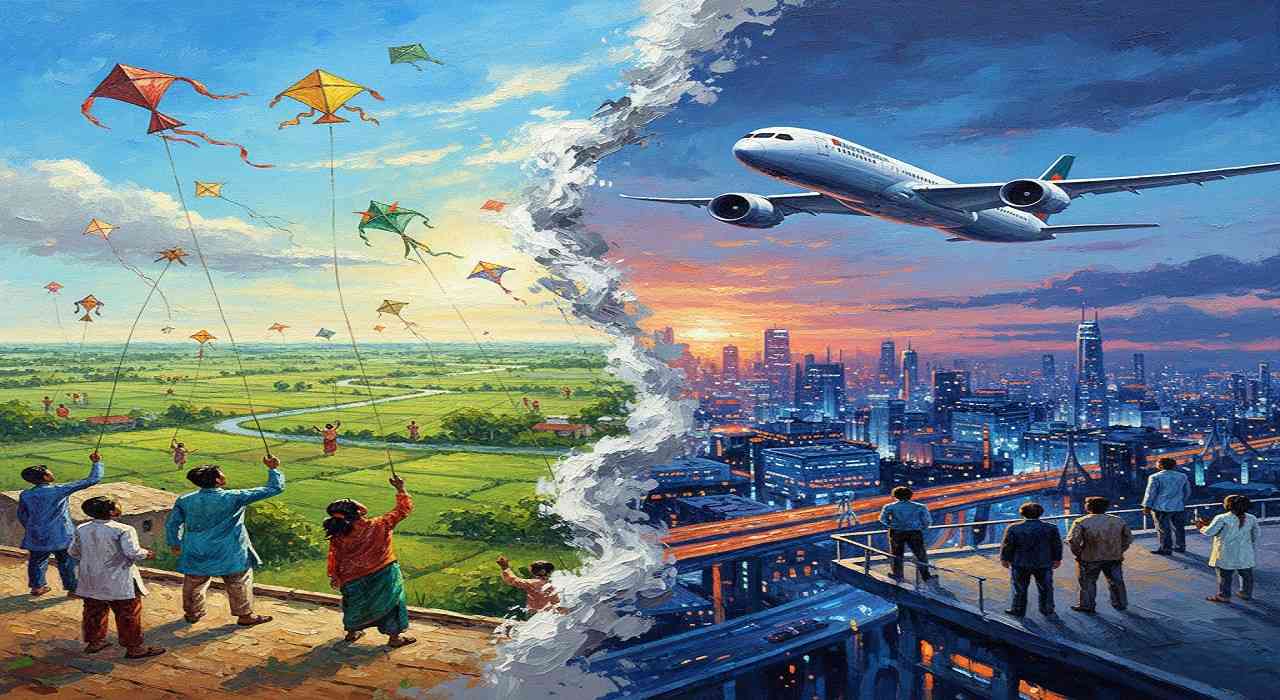
Have you ever looked up at the sky and wondered how our
flying journey began? For the people of this land, the dream of soaring above
the clouds is very old.
Our very first type of ‘air culture’ started with flying
kites, a popular activity in Dhaka since the Mughal period. By 1740, under Nawab Nazim Nawazesh Mohammad Khan, kite flying had become a joyful tradition. Today, the colourful kites during the Shakrain festival in Old Dhaka remind us
of that original sky culture.
But, tell me, were our ancestors satisfied only with kites
tied to strings? Absolutely not!
The first brave attempt at manned flight happened in 1882
when the Nawab family of Dhaka tried, though unsuccessfully, to fly a person.
Ten years later, in 1892, a dramatic and very sad event took place. Nawab Khaja
Ahsanullah invited Jeannette Van Tassel, an expert balloon flyer from America.
She planned to launch her balloon from the Buriganga riverbank and land on the
roof of Ahsan Manzil.
Can you imagine the excitement of the people watching?
Unfortunately, a sudden strong gust of wind pushed her balloon towards Shahbag.
She hit a tree, fell to the ground, and died tragically. This fearless woman,
who was the first person to die for the dream of flying in Bengal's sky, still
rests in Narinda, Dhaka.
The path to modern aviation took a sharp turn during the
Second World War. In the 1940s, the British government started building
airbases here for military reasons. They needed to stop the Japanese from
invading and deliver supplies to Burma. This is how runways were created in
many important places, including Tejgaon, Cumilla, Cox’s Bazar, Jessore,
Chattogram, and Sylhet.
From 1943 to 1945, Tejgaon and Shah Amanat airports were
extremely busy hubs for Allied cargo and warplanes. Do you know the importance
of this? These runways, built initially for war, became the strong foundation
for modern flying in Bangladesh.
After 1947, a new chapter of civil aviation began. British
and American airlines started operations in Dhaka. In the 1950s, DC-3 aircraft
connected Dhaka and Karachi. Later, PIA (Pakistan International Airlines)
introduced Boeing 707s and helicopter services. Sadly, by 1971, these aircraft
were used by the oppressors to move weapons. When the Pakistani Air Force
dominated our skies in 1971, our brave sons created a strong resistance.
In September 1971, the first unit of the Bangladesh Air
Force, known as Kilo Flight, was formed in Dimapur, India. They were ready with
only a few aircraft, nine officers, and 47 airmen. On December 3rd, Kilo Flight
launched successful bomb attacks on oil depots in Chattogram and Narayanganj,
led by Captain Akram Ahmed and Squadron Leader Sultan Mahmud.
We also remember the incredible sacrifice of Flight
Lieutenant Matiur Rahman. He died trying to hijack an aircraft from the heart
of Pakistan to join the Liberation War. His self-sacrifice is a bright star in
our history of air warfare. By the end of the war, the runway at Tejgaon
Airport was ruined.
But Bangladesh rose from the destruction. On January 1st,
1972, civil aviation officially started in independent Bangladesh. A Cessna
F-150 aircraft, flown by Captain A Rahim, took off from Tejgaon Airport. Soon
after, our national flag carrier, Biman Bangladesh Airlines, was established.
With support from friendly countries, the fleet of aircraft grew slowly. In
1981, operations moved from Tejgaon to Kurmitola, which we know today as Hazrat
Shahjalal International Airport.
From the humble Mughal kite to today's modern Dreamliners
and Boeings, Bangladesh's journey into the sky has been difficult. It is a
story built on sacrifice, courage, and the deep dreams of countless people. Doesn't
knowing this make you feel proud of the history that lifted our nation so high?.